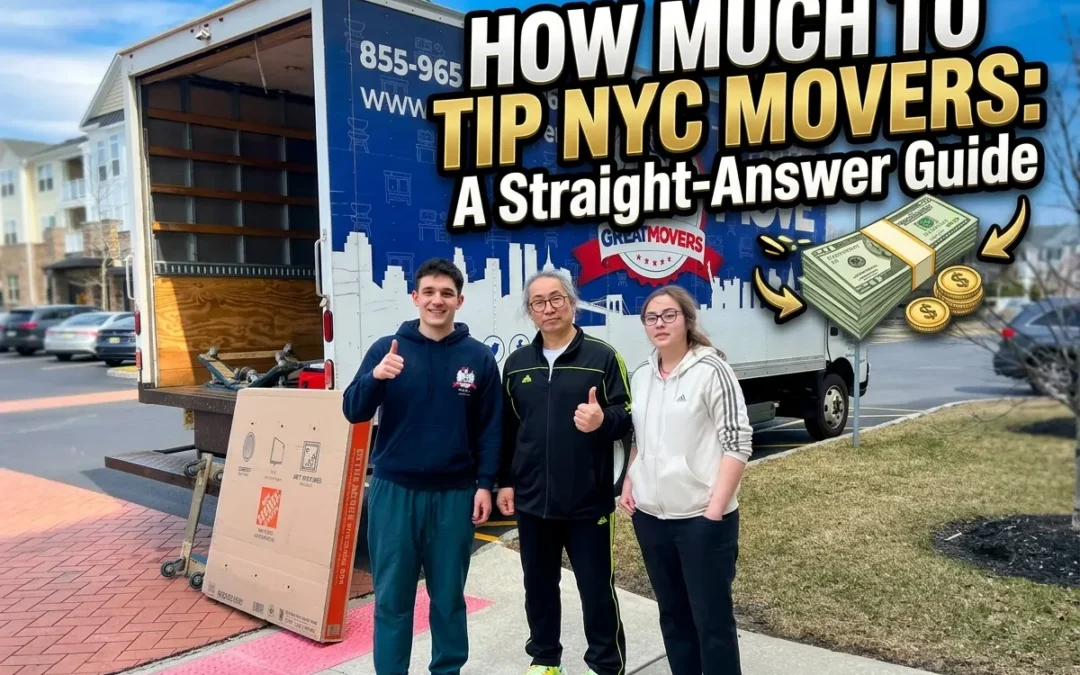

Making a NYC move is not the same as moving to more suburban or rural parts of the country. You have to deal with bad traffic, old buildings, limited parking, and more, which can greatly affect the cost of a move. How much your move costs depends on a lot of things, most notably distance and time. The shorter your move, the less money it will be. According to Forbes, local moves can be as low as $600 while long-distance moves can cost as much as $10,000. With so many factors to consider with your move, how can you create a realistic moving budget? The easiest and shortest answer is to keep your expenses low, which means reducing how much you’re moving, not adding any additional services, and moving locally. Of course, these aren’t always an option, so let’s take a deeper dive into budgeting for your NYC move.
Key Takeaways
- Professional NYC movers can cost anywhere between $500 – $15,000 based on time, distance, and size of your move
- Moving costs can vary based on timing, with May-September being the most expensive period and October-April offering lower rates, but chance of delays due to inclement weather
- Research movers by vetting reviews and also asking for references from the moving company
What Are Your Moving Needs?
Before you can get an estimate for your move, you first need to figure out your moving needs. Identifying the scope and requirements can help identify factors that could drive up your costs.
Create an inventory
Before this step, you should take the time to declutter your belongings and figure out what you are actually going to bring to your new place. Unless you’re a minimalist, chances are you have amassed a ton of stuff that you likely don’t need. Go through everything you own and use the 3-second rule – every item that goes into your hand, take three seconds to decide if you will keep it or toss it. Once you’ve placed it in the pile, you can’t switch it out!
Now that you’ve pared down your items, it’s time to take a detailed inventory of everything you own.
- Take pictures or videos of high-value items like artwork, electronics, jewelry, antiques, etc. Store these in a secure, cloud-based solution
- Write up your inventory list of everything you pack and create a system to track the contents of each box. Color-coding is a great way to stay organized
- Keep track of specifics such as weight, size, and value of all the items you pack
Determine move scope
Just because the average for a local move is $800 doesn’t mean you’ll pay that amount. There are a lot of factors that go into your final cost, including:
- Distance – the further you move, the more money you will spend. Local moves will always be cheaper than long-distance moves
- Move size – the more stuff you have, the more you will have to pay. This is especially true for long-distance moves, as the fixed rate is based on the total weight and volume of everything you’re moving. Of course, even with hourly moves, you’ll end up paying more if you have more boxes!
- Additional services – sometimes you can’t finish all the moving tasks within the necessary time frame and will need a little help. Whether it’s packing, storage, or other services, you can ask the moving company, but it will cost you extra. If this is something that you need, you should set aside a bit of extra money in your budget
Research moving costs
Are you planning to hire a professional moving service or go the DIY route? Your costs will vary significantly based on what you choose, but remember that going the DIY route means you’ll spend a lot more time and energy on your move. If those are things you value, it might be worth the extra cost to avoid the hassle of moving in NYC.
Average NYC Moving Costs by Apartment Size
| Apartment Size | Average Cost Range |
|---|---|
| Studio | $500 – $900 |
| 1 Bedroom | $700 – $1,200 |
| 2 Bedroom | $1,000 – $2,000 |
| 3 Bedroom | $1,800 – $3,500+ |
| 4 Bedroom | $3,000 – $6,000+ |
In general, DIY moves mean renting a moving truck and doing all the packing, loading, unloading, and unpacking yourself. The cost of a DIY move is more than just the truck rental fee. It also includes:
- Gas, tolls, daily rate, mileage, and other fees
- Equipment rentals for dollies and ramps
- Packing materials like boxes, packing tape, bubble wrap, etc.
When combined, you can expect to pay, on average, around $250-300 if you rent a truck.
When it comes to hiring professional movers, you can expect to pay around $500. Your bill might increase or decrease based on how much you are moving and how far you’re moving. Local moves tend to be charged by the hour, and many companies charge a four-hour minimum. If you’re well-prepared, you could hire professional movers for as little as $300. There are several things that can bring up the bill, such as:
- Additional services (packing, unpacking, storage, etc.)
- Materials charges for any boxes they might have to use on items you haven’t packed
- Extra charges for stairs, heavy items, and long carries
- Request for a certificate of insurance from your building management
- Travel time from the mover’s garage to your current apartment and from your new apartment to your mover’s garage
- Tip for the moving crew
Remember that hiring professional movers during the off-season (October through April) might also reduce your overall costs, as there isn’t as much competition during these months. Moving companies might be running a promotion, or you may be able to negotiate lower rates.
Moving costs don’t stop at hiring professional movers or renting a truck. You also need to consider all the other expenses related to moving, including:
- Security deposit, broker’s fee, first month’s rent
- Utility startup costs
- Cleaning services or supplies
- Transportation for yourself
- Purchasing new furniture and decor
- Groceries and pantry staples
- Child and/or pet care
How Do You Make a NYC Moving Budget?
There are plenty of places online where you can find a moving budget template, but it’s easy enough to make one yourself. You can use any spreadsheet software and then break it up into three columns:
- Category: List out all the expenses related to your move, like movers, storage fees, packing materials, transportation, etc.
- Estimated Cost: Gather quotes from different companies and place that information in the estimated costs section. For things like packing materials and new furniture, make sure to do your research online to find similar items you might like and enter that information.
- Actual Cost: After your move, make sure to enter the real expenses in this column to see how close to your budget you got.
This simple method allows you to track your expenses in real-time and discover any issues with your budget. Don’t forget to enter things like your utilities and other monthly bill payments you need to make in your budget as well. The whole point is to see how much you can reasonably afford, and you definitely don’t want to miss payment on your electricity bill. If you’re only able to afford $10,000 for your total budget, you might have to get creative when it comes to cutting costs.
Inventory Value & Insurance Planning
| Item | Quantity | Estimated Value | Insurance Coverage Needed |
|---|---|---|---|
| Sofa (3-Seater) | 1 | $1,200 | Full Value Coverage |
| Queen Bed + Mattress | 1 | $1,000 | Basic Liability / Full Value |
| Dining Table + Chairs | 1 set | $1,500 | Full Value Coverage |
| Electronics (TV, Laptop, Speakers) | 5+ | $3,000 | Full Value Coverage |
| Kitchen Appliances | 5+ | $1,200 | Basic Liability / Full Value |
| Clothing & Personal Items | Multiple | $2,000 | Basic Liability |
While you’re at it, take a look at your inventory and include another column for value. Whether you purchase moving insurance from a third party or pay for the full valuation from moving companies, you’ll need to know the current value of your belongings. That way, should anything get lost or damaged during the move, you can submit a claim.
How Can You Reduce Moving Expenses?
There are so many little expenses that add up during a move, it’s all too easy to rack up charges on your credit card. If you’re working with a tight budget, you’ll need to take advantage of every trick in the book to stay on track. Below are some easy tips on how to keep your NYC moving costs down.
Best Times to Move in NYC (Cost Comparison)
| Season | Average NYC Moving Cost | Demand Level | Money-Saving Tip |
|---|---|---|---|
| May – September (Peak Season) | $1,800 – $3,500 | Very High | Book early, expect higher rates |
| October – December (Off-Peak) | $1,200 – $2,200 | Low | Negotiate discounts, flexible scheduling |
| January – April (Slow Season) | $1,000 – $2,000 | Lowest | Best chance for promotions & deals |
Time your move
May through September tend to be the most popular months to move. If you can time it, try to move during October-April, as many movers will provide promotions and/or be more open to negotiation.
Sell your stuff
If you have a lot of things that you need to declutter, instead of tossing them in the trash, consider selling them, especially if you have name-brand items. You won’t be able to sell it for the original value, but something is better than nothing.
Empty your fridge and pantry
Avoid buying too many perishables and pantry items before your move, as these will just increase how many boxes you need to pack and how much time it will take you or the movers to load and unload. Not only will it reduce how much you need to pack, but it also reduces food waste.
Pack yourself
If you have the time, pack everything yourself. Give yourself at least a month to pack up your apartment yourself. That includes time to declutter! When packing, make sure to maximize your space by putting small items into bigger ones and vacuum packing things like clothes, bedding, and so on.
Ask for help
Ask friends and family to help you move. If they don’t want to help with the actual loading and unloading portion, ask for boxes, child or pet sitting, or maybe even a bit of money to add to your budget.
Stick to Your Budget
Take the time to really think about how much you can actually afford for your move. From there, you can calculate your estimated costs and see where you might be able to make some cost-saving measures. You get what you put in, so don’t rush.
FAQ
Do I get charged extra for moving things like furniture or other bulky items?
It depends on the moving company. Some might charge you extra for things like pianos, while others won’t.
How much should I set aside for unexpected expenses?
You should budget at least a 5% cushion of your total moving budget for surprise costs. It can help with things like groceries, meals, and more.
Do I need to tip movers?
While you don’t have to tip movers, if they did a good job, it is customary to provide a tip. Ideally you should tip around 10-20% of the total bill.
Will I get charged by weight or by the hour?
It depends on if you’re making a local or long distance move. Local moves tend to charge hourly while long distance moves are fixed rate based on weight and volume.
What is a good budget estimate for an NYC move?
It depends on a lot of factors, but you should probably set aside at least $1,000 for just the moving process alone. For everything else such as groceries, security deposit, etc. you could be looking at as much as $10,000.
How many moving companies should I call to get a quote?
Reach out to at least 5 moving companies to compare quotes and to find one that offers all of the services you need within your budget.